Tuesday, October 30, 2007

...From the Town of Selective Blind Spots...

Cities have their idiosyncratic temperaments, flavors and side effects. Just the way people look at you in a city, sends some of those flavors up your nostrils. There is something ironic about this city. It is perhaps the latest organized city on the country’s map, but markets here are lined with old book shops and antique stores. Hub of documented politics, colored number plates, plaster-faced people in big cars, labeled houses, guards and trees, but something about the temperament of this place stills any possibility of real life philosophy.
.
.
.

Is it just this city or the whole country? Like a score board of an ill-fated game, every morning newspaper brings with it a certain number of casualties, from Swat, Waziristan, Islamabad, Karachi and other cities, with phrases like ‘human limbs hanging from lamp posts and trees’. I read somewhere that philosophy is for the rich and poetry for the poor but I don’t know if either of these arts exist anymore. Or perhaps I am a simpleton, unable to filter them out from modern day journalism. When I realized I will be moving here, I was thinking trees, winters and long silent roads, not to stimulate me to write but to pacify some worn neurons. But something about the city has changed. There are hidden blood stains and a post-traumatic silence. Blood of the previously unseen, down trodden articles of this rich city – madrassah going people, security guards, dhabba owners. Before these carnages, people probably thought there was no poor man in the capital.
.
.
.

A Pakistan Studies teacher once told us about his friend, who had come from East Pakistan. He sniffed the air of the capital here and said, “I smell the jute of Bengal here”, since it was, perhaps, the work of dissatisfied Bengalis that fed the establishment of a capital in West Pakistan. I don’t know, I wasn’t there - I am not qualified to verify or contest the statement. But I smell the blood of many other cities here.
.
.
.
I can suddenly see the poor people here. They suddenly mean something, like the mountains up North suddenly meant something more after their long silence, on that October day two years ago. Like the blood lost in all other cities is fueling something right here, right at the heart of where the blood is dispelled from. Incoherent, self-contradictory, illogical philosophy – that is all I can produce for now.
.
.
.
I love this city, but it will never be mine, not with its selective blind spot.






Monday, July 16, 2007

… From the town of Headless Mannequins…

So, we give in.
It’s not so easy to enter Heaven. No secrets, equivocation or exaggeration about it.
So, we give in. Sometimes, we give up.
.
.
.
How simple it was for him, the Sahabi who recited the qalima, carried a sword and became a martyr, in the real sense of the word martyr. No battle of nafs in everyday things, no prayers, nothing. Faith and martyrdom, direct and conclusive. But I wouldn’t go so far with assuming, who knows, he may have wanted to live through this test here. Allah knows.

Back in the town where the clear distinction between native men and women is black and white, literally. The town where you see two mosques for every twenty houses. The town that almost entirely kneels and bows with every categorical solar positioning. The town with His House on the left, and Prophet’s home on the right. The town, where, like before, I feel protected and a little more honest to myself than my hometown allows, or will ever allow?


.
.
.
The town of Headless Mannequins.


God says there’s a purpose for all of this.
I believe Him. I don’t see it, but if He says it’s there, I believe it. I’ll try to, at least.

Monday, April 30, 2007

... About the Heart...

From the time human language began making sense to you, it has been about the colored paper called money.
.
.
.
It has been about documents.
It has been about rules set down by the convoluted growth of our civilization.
It has been about those with more white hair on their heads than you.
It has been about those born with power through a little game of destiny.
It has been about those whose synapses work out more magic than yours ever would.
It has been about conventions that have passed down, questioned and unquestioned.
It has been about those who profess a little more faith than you do.
.
.
.
The world has always been about them.
When was it about the heart, anyway?

.
.
.
One dream or a thousand dreams, who consults the heart when it comes to decisions? When you were a speechless toddler, you could see your dreams through: no documents, rules, synapses or conventions stood between the heart and reality. It was all about the heart for you then. But the minute your secret went out, the minute you began understanding something about how the world runs, your dreams are not seeable anymore. Your heart still goads you to create magic mountains and stardust in a little fantasy corner… and life teaches you to pluck each grain of dust out of that chimera. Something about it bites, but letting go of those dust particles becomes routine work.
.
.
.
It doesn’t become easy, ever, though.
Take that.

Friday, February 16, 2007

… Rumi Fa’ani … Iqbal Ba’qi …


.
.
.
“All that dwells on the earth is annihilated and there subsists only the face of your Lord, the possessor of majesty and generosity.”

Surrah Ar-Rehman, 26-27
.
.
.
Fa’ani is annihilation, the third step on the Sufi path: one who is dead in worldly attributes and alive in divine attributes, only. Complicated talk, perhaps.
.
.


After roaring expansion in Eurasia, during the medieval era, the thirteenth Gregorian century brought Islam’s political downfall, an affliction it never quite recovered from. This seems to be the course of events in human race: happy times produce extravagance, monuments and babies; troubled times produce criminals, angst and poets. While it cost Islam many lives and lands, the disturbed times produced Jalal-ud-Din Rumi, goading his falling people into rhymes of mystical uplifting and spiritual love.

After ruling the subcontinent for centuries, the Muslims lost it to the foreign powers. While the explicit enemies were Mongols in Rumi’s time and the British in Iqbal’s time, the common implicit adversary for Iqbal, and his spiritual guide Rumi, was decentralized leadership and struggle for power. What added to Iqbal’s uneasy times were the fall of Khilafat, a puppet icon of Islam’s once flourishing history, stagnation of Muslims’ collective intellect, and the academic and professional progression of Hindus the Muslims once flaunted in ruling.


Rumi, in his writings, employed the term ‘qalandar’ to describe a Sufi who has achieved the highest state of annihilation (fa’na) from himself, and all that is left (ba’qi) is the Self. Typing this out on an electronic keypad, in the twenty-first Gregorian century, I wonder if I even know what they mean, all these words I just put down. Isn’t “Qalandar” the word you hear from qawwalis, pseudo-qawwal pop stars, and at pseudo-oriental-drum-banging-burger-class-hangovers of spirituality?

The trick of learning from associations is so mechanical that when readers, who are striving to be authentic believers, see these two words (fa’ani, qalandar) coming from one author, they tend to suspect his ideology.
.
.
.
I, myself, have always had problems digesting ‘fa’ani’ and my simplistic understanding of it. Does it really mean Sufis aspire to reach such a height of proximity with God that they would annihilate themselves from the world, including the rights of their body and those who depended on them? Is this really what Allah Subhana Wa’tala refers to in verses twenty-six and twenty-seven of Surah Rehman? Or, is Fa'ani just annihilation from the wonts and wants of your nafs, your lower self?


Iqbal, although an enthusiastic follower of Rumi’s spiritual teachings, rejected the Sufi concept of Fa’ani. As R.A. Nicholsan puts it,
“As much he (Iqbal) dislikes the type of Sufism exhibited by Hafiz, he pays
homage to the pure and profound genius of Jalaluddin, though he rejects the
doctrine of self-abandonment taught by the great Persian mystic and does not
accompany him in his pantheistic flights.”

Iqbal’s negation of fa’ani rescues Islam from the seemingly Buddhistic theories of annihilation and self-desertion. He condemned ‘fa’na’ as a concept, which was a complete antithesis to his theory of ‘khudi’ and what he considered “more dangerous than the destruction of Baghdad” (an ironic quote for these times, isn’t it?).
.
.
.
Rumi employs the term ‘mirror’ for a ‘fa’ani’ and one wonders what that means. My understanding (simplistic, like I said) is that annihilation should be from justifications and explanations of our iniquities. The mirror-self of the fa’ani should be so pure that it should reflect sin as sin, and not diffuse your inner eye into working out a defence mechanism to find excuses for your misdeed. Like Rumi says of one who has annihilated,
“He is neither this, nor that: he is plain”.
It is that pursuit for ‘plainness’ which may bring Rumi and Iqbal on the same table of Fa’ani.
.
.
.

Wednesday, January 31, 2007

...Art Therapy...

When words aren't left... anymore.

Friday, December 01, 2006

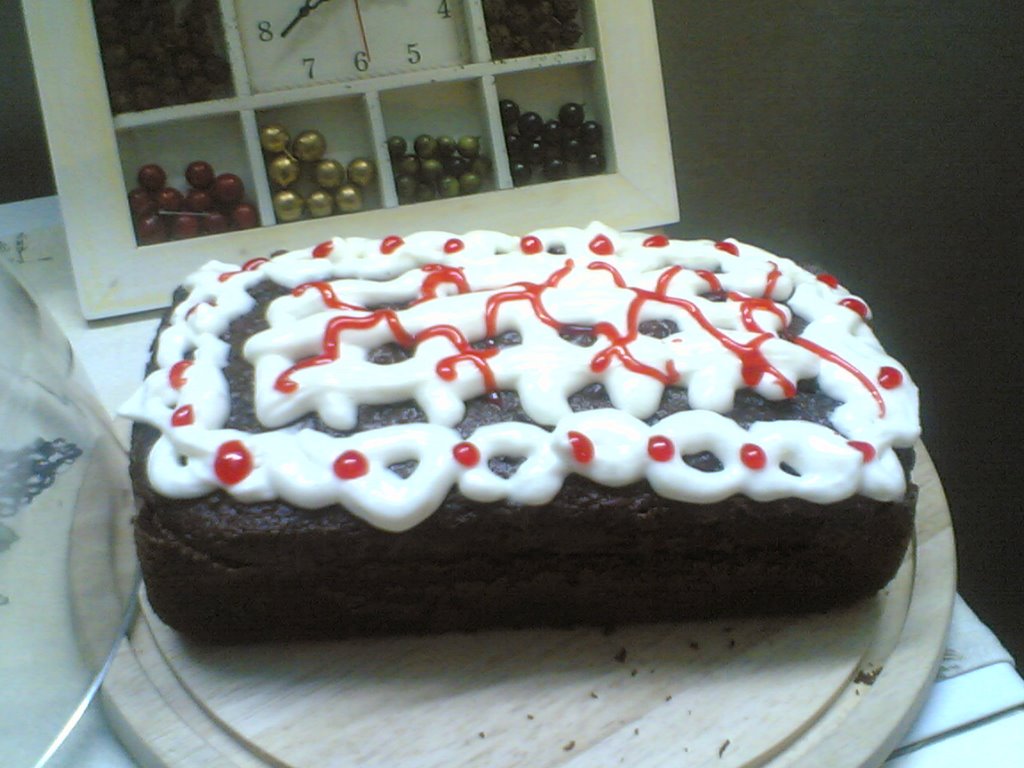
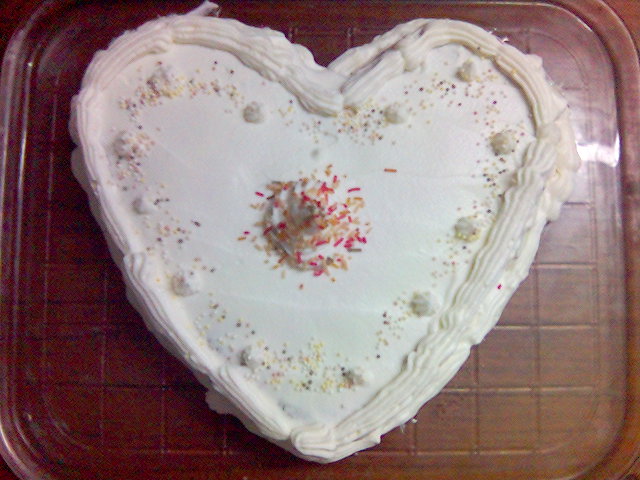
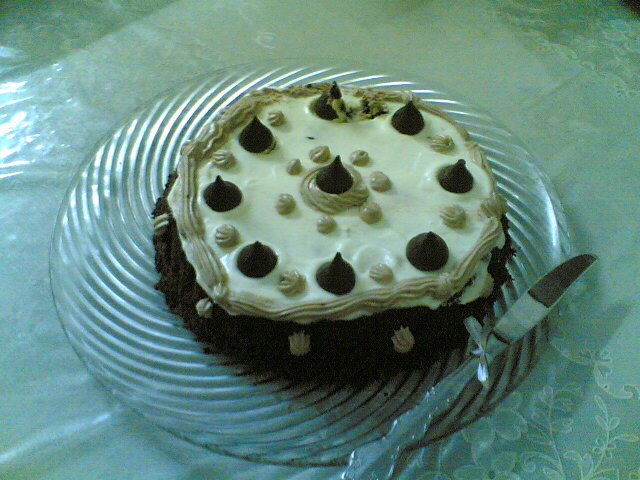
...Caked...


...

Wednesday, October 04, 2006

... Solemn Recantation...

I realize now, how little we know about ourselves and the unfolding of who we will be and what large claims we make in our formative years about the future. How we suckle on some moments of life, and document them on paper, within neural circuits, as if the rest of our existence in this dimension is going to depend on that.

And then, how easy it is, wonderfully easy…revoltingly easy… to let go…


And restart.


Just push the right button.

Like there was no past, you just never existed. Even the name you so prided over, the name you thought made you shine out of the darkness of the rest of creation, it can fall into anonymity and you don’t feel the loss. That’s the strangest part of it, you feel absolutely no loss in this surrender, in this homogeny with something that was never yours… when you feel now, that this is all there was, from the beginning.

And the beginning took place just now.

The hair has grayed and the back bone makes slight crackling noises and the calcium of your teeth is less of what it was. But you’re brand new.

And you grope in the darkness behind you and there is nothing there. You, especially, are not there. This is what frightens you the most, your absence in those foot-prints and the knowledge that you’re never going back there. You will not be accepted there, you’ve burnt the bridges, ships, foot-tracks, pages, tunes, laughter, everything.

Did you really have to do that? Disassociate and start all over? Not turn around when anyone calls out your name from behind you? Never look into pages where you documented even your sighs? Everything is brand new, still wrapped in plastic for you to unwrap and delve into. Even your skin feels plastic. A grand total of zero individuals have asked you to do this. This is your call…and you’re not even scared. You are in a numbing sort of joy. You wonder how remember your language, though.


Some artifacts try to make their way across… but only on the superficial level, some books, some cities, not people though. Not entirely, at least. This is you in a personal world, not shared by people. And you will build the walls yourself and hold the fort. God Willing.


You worry me slightly.
Just that.


I wonder how you survived it, you blog, you.

Monday, July 24, 2006

...Ascension to Grihastha...

To Grihastha, yes.
.
.
.
But only in flowery 'spiritual' terms. My own religious scruples dictate me towards a more practical demeanor and I celebrate both rides, flowery and the real one. So, a sailor you are… and a sailor I am. And here we are, with our own pretty little festival of our fanciful Noah’s ark. And yet, here we are, soul-sailors riding out of the non-physical land that will succumb to dust behind us? Temple by temple, pillar by pillar, ash by ash, flame by flame . . .


.
.
.


Shams Tabraiz asked, "Who is greater, Muhammad or Bestami?"
Rumi replied cautiously, "Muhammad."
"But Bestami said 'I am the Glory!' Muhammad said, 'I cannot praise You enough!'”
Rumi fainted under the force of the question from the strange dervish. When he recovered, he uttered, "Bestami had a glimpse of knowledge and took it for the totality. But for Muhammad the divine glory was continually unfolding."
And Shams knew he had found his worthy disciple.

.
.
.

There, sailors! That is what ye all need to know for your Grihastha trip. The magic of perpetual amazement and continuous unfolding and the fluid expanse of all that we may never see in its entirety. That we must restrain from even wanting to see in its entirety. God ordained this journey on Noah’s ark, don’t think about what lays beyond. Think of the ark itself, of the companions.

Of the companion.

Tuesday, May 23, 2006

… Of those Little Messiahs…

It’s one thing to teach approach-approach conflict.
.
.
.
To roam from one side of the room to another, moving your hands, making collective eye contact with 14-16 pairs of eyes looking at you. One thing to give an example, a sober example and read the looks in their eyes. One thing to follow up on that example with a novel, perhaps even comical example… and watch the ice of seriousness crack down from the first row to the last one… as these individuals come to life. One thing to teach them how to give critical respect to Sigmund Freud, one thing to keep the Freud joke from becoming un-academic.
.
.
.

Yes, all of it is still… one thing.
.
.

It’s another thing to deal with the approach-approach conflict.
.
.
.

Faith makes it all so simple, doesn’t it? Just put your trust in Him and move on. Say farewell to those 14-16 pairs of eyes, and twice that many. To feel so little and silly yourself but to speak words of farewell in a tone of some highbrow, wise orator. And cut yourself short, and tell your insides, ‘Don’t do that…’. But such are human roles and expectations. But these 14-16 pairs of eyes, and twice that many, they were Messiahs. They expected something, yes, but gave much more in return.

.
.
.
I know their histories.
Like friends, sisters, brothers, children.
Even children. Even if it sounds pompous. Even if my insides tell me again, ‘Don’t say that…’.

I wonder how teachers take their work for granted, how the world doesn’t understand the plasticity of a human being when you stand as an instructor in front of 14-16 pairs of eyes, and that twice that many…
.
.
Two years of plasticity.
.
.
Of laughing their laugh, listening and listening and little more. And talking. And a little more. God, I know even this is pompous… whoever put standards on these things!

My little Messiahs, my buffers, my ‘vitals’… my hope in the world when it really seemed like the world was going to dogs.

“Okay, we are going to talk about…” And 90 minutes of that talk.
Twice a week, thrice a week.

---
And the tug from the Other Side.
.
.
.
The Tug-ger… beyond human language in the first place, and my case is saved as the tug-ger would never want me to scribble a word about the Tug here. Wild impulse one feels when fingers drum on this keyboard… but I will honor your privacy, Tug-ger.
.
.
I will, inshAllah...

Friday, May 12, 2006

... Cauterized?...

Even if I stand in my flowery garden...


... the world far and around still burns.

Thursday, May 11, 2006

... Iqbal, on appreciation of art...


“History has preserved some of the criticisms of our Prophet on contemporary Arabian poetry. But those of these criticisms are most profitable to Indian Muslims whose literature has been chiefly the work of the period of their national decadence, and who are now in search of a new literary ideal. One of these criticisms indicates to us what should not be and the other what it should be:

1. Of the Poet Imra-ul-Qais who flourished about 40 years before Islam, our Prophet is reported to have said:

“He is the most poetic of all poets,
And their leader to Hell.”


Now what do we find in the poetry of Imra-ul-Qais?

Sparkling wine, enervating sentiments and situations of love, heart-rending moans over the ruins of habitations long swept away by stormy winds, superb pictures of inspiring scenery of silent deserts - and all this is the choicest expressions of old Arabia. Imra-ul-Qais appeals more to imagination than to will, and on the whole acts as a narcotic on the mind of the reader. The Prophet’s criticism reveals this most important art-principle - that the good in art is not necessarily identical with the good in life; it is possible for a poet to write fine poetry, and yet lead his society to Hell.

The poet is essentially a seducer; woe to his people, if instead of making the trials of life look beautiful and attractive he embellishes decadence with all the glories of health and power, and seduces his people to extinction. Out of the richness of his nature he ought to lavish on others something of the super-abundance of life and power in him, and not steal away, thief-like, the little they already, happen to posses.

2. Again, the following verse of Antra of the tribe of Abs was read to our Prophet:

“Verily, I pass through whole nights of toil to merit a livelihood worth of an honourable man.”

The Prophet whose mission was to glorify life and to beautify all its trials was immensely pleased, and said to his companions:

“The praise of an Arabian has never kindled in me a desire to see him, but I tell you, I do wish to meet the author of this verse.”
Imagine the man, a single look at whose face was a source of infinite bliss to the looker desiring to meet an infidel Arab for his verse! What is the secret of this unusual honour which the Prophet wished to give to the poet? It is because the verse is so healthful and vitalizing, it is because the poet idealizes the pain of honourable labour. The Prophet’s appreciation of this verse indicates to us another art-principle of great value- that art is subordinate to life, not superior to it. The ultimate end of all human activity is Life -- glorious, powerful, exuberant. All human art must be subordinated to this final purpose and the value of everything must be determined in reference to its life-yielding capacity. The highest art is that which awakens our dormant will-force, and nerves us to face the trials of life manfully. All that brings drowsiness and makes us shut our eyes to reality around - on the mastery of which alone life depends - is a message of decay and death. There should be no opium-eating in Art. The dogma of Art for the sake of Art is a clever invention of decadence to cheat us out of life and power.

Thus, the Prophet’s appreciation of Antra’s verse gives us the ultimate principle for the proper evaluation of all arts.”

Friday, May 05, 2006

... Rumi, after a while...

…Cogito Ergo Sum…

I think, therefore I am.
But are either of these worthwhile, what I think, whether I am?

My fundamental reality is dust.
Just that.

And the reality of my thoughts, are the ashes we call words. The paradox is there, thence; words cannot acquire dust-form, for meaning cannot turn to dust. Why one feels disillusioned by a mission, is perhaps disillusionment with life itself, in a macrocosmic view. And this can only be because there is that senseless sprint after purpose…

“Our Lord, You have not created this (world) without a purpose…” Divine words, from a marked Chapter…but carry that spike… that pricks the mind… with thoughts… thoughts… wanting definitions… all laid out. And limited.


Purpose… purpose… purpose…?


Dreams of monotonous rain appear more purposeful than the waking up at six o’clock in the morning routine. The purpose of Sleep, a necessary waste of time, is more defined… more worthwhile, apparently.


Whether Purpose, Meaning and Feeling are divergent or converge somewhere down the path… I don’t know. There are meaningless feelings, and purposeless meanings. There are events, of Feelings… but only the Meaning is carried across, down to the memory lane… and even there, the Purpose maintains its clandestine aura.


The poet with his Feeling, scribbles in fervor, but only the Meaning remains. Sometimes, not even that. And then, all this is not created without a purpose?

Just momentary venting of Feeling?


What is the point of all this prattle? Absolute junk… just hedonistic games with the pen, a necessary waste of time… to sprinkle big words down on the screen, generously, and watch them take form… and feel disgust and love all at once.


Just a luxury of big minds.


There is one thing I cannot bring myself up to agreeing with. There are no incredible minds, except the prophetic souls. The rest must lead a life of dynamic struggle to achieve incredibility. The Bedouin, with his simple-hearted mind, no education, no complex cognitive processes, took the Kalma better than any of us could. He did not ask Mohammed SAW whether he was making a political statement with his monotheistic doctrines. He was tortured and killed for a simple truth.

And he died for no high-brow, artsy philosophy, only love.
And I feel, at times, the rest of us pompous talkers, will just swing between sincerity and insincerity towards faith… as it says in 'The Grande Chartreuse'...

“Wandering between two worlds,
one dead,
The other powerless to be born.”
--Matthew Arnold


SOS, God.
Please.

Friday, April 14, 2006

… Not quite in the offing?…

This is quite characteristic of human experiences: tempting as it may be for enthusiastic philosophers, these experiences struggle to remain un-intellectualize-able (with a self-proclaimed poetic license, I can invent this word). What is simple, will remain simple. You can dampen it with a million and one unintelligible words and pompous theories but a simple emotion, will remain a simple emotion.
.
.
Simple, urgent and yet, unfathomable.
.
.
After worshipping Silence for long, I now have come to feel this deference for Simplicity. With caution, yes, since it lies on a borderline with tradition and blind norms. Half a lifetime spent (if not wasted) within the bowels of witnessing life playing its scandalous tunes. And now, here, the unit of my being stands with starry-eyes, witnessing life’s stroke of miracle.
.
.
A miracle, really.
.
.
.
How much you end up conveying… when you want no one to know what you are saying. Not even someone. This once, not even someone.
.
.
And then, there is the art of waiting. Though popularly known to be a passive deal, it is really… a bloodless war, where you’d like to shed at least a few drops of blood to have ‘something to show for it’.
.
To be able to show-and-tell… “Look!” Poke, poke! “Blood!”
.
.
.
And then, there are dreams.
So fluid, like the rest of existence.
So flexible, you start wondering if you are just justifying it all for the sake of contemporary happiness. Is happiness really a linear thing, thread-like or encapsulated within moments? Meant to be for a particular instant, dissolving therein? Perhaps simple emotions work that way.
.
…But not where God is concerned. In spite of fluctuating Divine Innuendos, happiness in His realm has nothing to do with transience. Encapsulated, yes, but the moment there is eternal. What is so difficult for many to understand … is the connection of aesthetics with God. No, they may understand it, but find it all too nonviable.
.
.
.
Then, what of divine verses, especially the metaphorical ones… the rhyming ones, the poetic ones… don’t they appeal to aesthetics? Can you not acquaint yourself with Him through that? Aren’t the lives of His messengers poetic? Even their pain and their longing and their words? Their actions…?
.
.
.

I know there are psychometric scales that measure happiness – filthy idea, with due apologies to those positivists who spent their lives validating such scales. But to put down happiness in metric units, in a figure? They are already working on robots who’d be able to tell what emotion you are feeling simply by looking at you (by recording and monitoring physiological changes in your body). And so, imagine a day when an automated being like that walks up to you… “Good Morning, Mrs. S… 14th of April, 2015, the time as we speak is 10:08 a.m., PST, the weather today is 30 degrees Celsius, your happiness level is 10.4 xyzs, your anger level is 4.2 xyzs …”
.
.
.
Dream of someone into artificial intelligence: my nightmare.
What crap.
Well, what do you expect…? My pen has wavered…
.
.
.

Sunday, March 12, 2006

... Of Six Days...


“Lo! your Lord is Allah Who created the heavens and the earth in six Days, then mounted He the Throne.”
.
.
.
AL-ARAF: 54

It takes my Lord, Allah, to create the cosmos in six days. And adorn it with lights and the firmament and all that is beyond insinuations of language. Six days is just an expression, perhaps… not a scrupulous measure of one hundred and forty-four hours.

For God.

.
For me, Six Days is a scrupulous measure of one hundred and forty-four hours…ticking away into a pathologically compulsive tick-tick-tick of the skinny needle of seconds’-hand. Only that in Six Days, I must deconstruct my own cosmos.
.
.
.
The act of building spaces around oneself, demarcating them superfluously … standing on them and screaming defensively: “Mine!”; guarding them in less-colorful terms than pieces of land are guarded… but guarding, still. The act of collecting words and ideas and self-glorified sacrifices in that personal chamber and shooting untrusting glances at every passer-by.

But at times like these, it is best to return to the basics. Yes, after all these stunts and ceremonial indulgences into the worlds of powerful intellect and philosophies… this is the lesson I have learnt: To give in to the simple, sometimes. Pomp and extravaganza may not echo my real self … loud noises, bold colors and crowded, steaming halls are not my cup of tea. But at the core of all these noises and people and their pomp – there is simplicity.

-
.
-
A certain Basic-ness.

-
.
-
And so, what is required is to accept this as a novice amongst the novices. Social psychologists celebrate role-playing as if it’s an accomplishment of human civilization. And there is no need for me to become icy-critical about these masks we must wear for our progressive, social Darwinism. These are all basic acts, not base. And not dull. Simplicity is, really, a luxury… a luxury known to many, celebrated by very few, very rarely. The only problem with it is its addictive quality, and hence … the withdrawals.

Six days to teach myself all this.
.
.
.
Six days to sit down and meticulously undo many eccentricities, those that cannot survive in another nook.

Six days to mould the malleable eccentricities.

Six days to learn to take each bout of life with a sense of wonder and the subtle joy of going through the unknown. You don’t need knowledge or insurance or even reassurances for ventures like these… you just need an enormous capacity of energy… you need acceptability and in the silliest ways, even suggestibility. And redundant as it may sound, you need faith in the One who created “everything” in Six Days.


Human biology is sometimes enough to learn the checks and balances Allah has kept, to ‘maintain’ our existence. If something goes wrong in the body, pain is the signal … to help you identify the locus of injury. And when that pain reaches a threshold, your brain squirts endorphins (natural painkillers) to tame that pain. And so, with that simplistic perspective, nothing can go wrong… there are too many back-up band-aids.
.
.
.
“Un kahee say durtay ho,
Jo abhi nahi aee, uss gharri say durtay ho?
Uss ghari ki aamad ki agahee say durtay ho!” .
.
.
.
Hah. What a sermon. Here’s to this six-day-self-indulgent evangelism …
Cheers.

Tuesday, March 07, 2006

... Depersonalization ...


They call it the ‘writing behavior’, the psychologists do, when the schizophrenic writes in delirium. Some theorists believe it is just the label that makes one a deviant, nothing is really "wrong" with pseudo-patients. Since my recorded history, I have manifested this writing behavior under stress – who is to diagnose the frequencies of sanity, then. But no tick-tack-toe, cross-checking correlation, everyone in the world knows more statistics than I do.


I remember the real spooky Little Days, staring in the mirror for a hundred seconds and feeling this loss of existence. When the hands, the head and all limbs were no longer a part of the self. It used to happen, and I would run to Api that I was scared. She never understood, I never tried hard enough either. Now Umair tells me he used to experience that flight of the inner being too, when little. It does not happen any more. Wordsworth says in verse that the Child in us celebrates his intimacy with Divinity, which diminishes as we grow older. But Siddhartha learned to carry it across age, perhaps, transcending from the waters to the trees to other organic entities.

It cannot happen any longer. It hasn’t happened in a long time, and it will not happen again – and so, it is not possible any longer to depersonalize, to move through the four dimensions of existence and convey, let alone reach? Or is it?


It is not.

We are limited beings. We do not whistle like the dark birds, where one shrill note narrates the tales of migration. Only rarely, very rarely, can we attempt to live through people, see life through them – or pretend, at least. It is what ambitious mothers call “singing through their sons”. I have attempted that too, with my brother… by sending him to places where I could not go… to speak to a lone, deranged man lying across a railway track, singing to himself. It works for a while, just a spark of a moment of self-gratification. But no, not a melodramatic Shakespearean character, ‘seeing joys through other eyes’, not that. Just to ‘sing through’, that ‘Symphony’…

Those are roles God hands down to us. We are born with labeled relationships.


Narratives cannot be easy things, eyes closed or open. Even as the ‘writing behavior’ was manifest in earlier days, I always believed speech to be better than scribbles. And too, God verifies this, that the greatest sign of His mercy is that “He taught eloquent speech to man”. Yet, to communicate with us, He chose the writing.


Monday, February 27, 2006

… Badsha Khan’s Prophecy…

I am no political analyst or critic, because quite frankly, like Gandhi, I can’t think of politics and religion in exclusive frames. After all my hysteria regarding these across-the-border wars, Bugtis caught my attention. From the Balochis, incongruently to the Paktuns. From there, the Pakhtun conflict.
.
.
From there, Badshah Khan.


That’s what I came to write here. This isn’t about Iraq or the Earthquake. It’s about someone we don’t know about. We know about his children and their children, but usually as ‘traitors’. I cannot decide right away, things like these require lots of research and spare neurons. I am low on both, at the moment. My best friend is a pathan – in our history of eight years together, she has done everything in her power (and she is powerful, in all domains!) to make me hate the Pathans, and has managed to do just the opposite.
.
.
While my all-Punjabi-blood friend came to blows with this all-Pukhtoon-blood friend, I had an insignificant role to play (being a cross breed of Punjabi and Delhi blood - raised to the power of Middle East). One narrated anti-Punjabi jokes, the other found her literature of anti-Pathan jokes. I don’t support borders within ethnicities but I am brave enough (finally!) to address and accept differences. Noosing the green-and-white-star-crescent flag around people’s neck is not going fix problems or end grievances.
.
.
I have admired the passion in Pakhtuns. My Pakhtun friend doesn’t and gives ugly names to their versions of passion. When she didn’t do too well in exams, she’d casually blame that on her pakhtun genes: “Pathans don’t have brains” (although she’s on her way to becoming an academic giant of peace, irony!). When she lost her temper, it was again, “the Pathan blood, not my fault”. Anyway, before this begins to sound like a love-poem for her… here is her ancestor… the man who led the greatest nonviolent movement ever, whose name is kept from our Pakistan Studies books, for reasons only controlled and contorted by historians.
.
.
"Badsha Khan was a Pashtun leader in the twenties who promoted Pashtun nationalism. He doesn't feature in many history books. He founded a political movement, the Khudai Khidmatgars, to fight for independence from the British. The movement's popular name—the Red Shirts—came from the members' uniforms, which were dyed with red brick dust. Like Mahatma Gandhi, Badsha Khan believed that nonviolence was the most effective weapon against colonial rule, and although he was a devout Muslim, he mistrusted the political influence of the maulanas, or Islamic scholars. The reforms he promoted—education, sanitation, road building—were secular."
.
.
.
So, this is for my Paktun friend.

Beyond the senseless fieriness of your genes and blood, there is some prophecy to be unearthed. And if it’s about reforms for education and the like, I can offer my hybrid solution too. I can’t engrave these words on a stone, for you to remember… forever. Cyber pulse is the next best thing to engravings, and so…

:)

Friday, February 24, 2006

... Lobotomy...

I am told I am on the verge of becoming the Prophet of Doom, with all my murky talks.
Alrighty, then, a little embittered humor doesn't bite.
.
.
A cousin sent this: (surely, a man's perception) of a desi female brain.
And since Majaz and I are self-proclaimed defenders of the so-not weaker sex, here is our reply. If only we could paste the conversation we had ... on this...
.
.

Tuesday, February 21, 2006

… Fluid Beings…


Their weighing machine gave erroneous results, that’s why I qualified as a blood donor today. One metallic bit into the skin, one repressed scream, one giggle from a student, and the fluid of life started flowing out of me, into something plastic.

Donating blood.
Detonating millions of thoughts… as fluid as blood itself.

I remember writing longish tales in 4th grade: “The autobiography of a dollar bill”, “Autobiography of a pen” and silly, sequential autobiographies of other inanimate objects. It would be interesting to write the autobiography of a drop of blood, minus the “unhealthy” aspects.
.
.
.

Half a liter of my blood.
Recipient of my hormones, my emotions, moments, illnesses, food I burnt, gulped, relished… into the veins of another being? Into their fluid, their emotions, their moments, their food?
Sounds sick and intrusive, invasive almost.

But it’s the fluid of life; it will return consciousness to someone, somewhere. No need for noble consolations about it, I am thinking along other lines.
.
.
.

We are, organically, fluid. The rest is dust, if not dirt.

A good seventy percent (give or take a few) of earth and human body is fluid, yet we boast the inflexible form of matter. One fluid purifies you, another fluid contaminates.

.

.


It is He Who has created man from water: then has He established relationships of lineage and marriage: for thy Lord has power (over all things).

Quran: 025.054

Fluid, all the way.
Human creation, procreation.

I am wondering how to wrap this writing up. But I don’t really need to do that. Respecting the subject of this writing, fluids don’t have boundaries. They flow into alwaysness, eternally…

Wednesday, February 15, 2006

... From the Lahore Crucible ...

It’s my grandmother’s favorite proverb:
.
.
“Saray sheher mai bhugdur muchi, burhia ko apnay nikkah ki puri”.
.
.
I don’t mean to ridicule myself but you can’t deny the aptness of this proverb. It saddens me, both ways, when I see Lahore on fire and protestors laughing away and tearing down buildings and when I see the flip side of the picture, where I see some people around me saying, “What’s the big deal, it was just a cartoon and we’re on the roads! Why weren’t we on the roads after 9/11?”
.
.
Who are these people, who don’t understand their own contradictions?
.
.
I am a cynic, I know, but I am sad right now, so everything is permissible! There are people Bullay Shah addressed incessantly: those who will spend their lifetimes trying to figure out what the length of the beard should be, when to pick on your wife for her ‘version’ of the ‘Hijab’, grotesque details of life beneath the surface of this earth, where to keep the hand, the finger in prayer (who cares about the heart, anyway?). I don’t deny the relevance of these issues, but I unapologetically abhor emphasis on it.
.
.
If there is chaos and fire a few kilometers from my office right now, with irrational people, who may never have missed a single Friday sermon in the past twenty years, it’s because the Friday sermons they listened to had nothing to do with what every Muslim has to know and understand today! We appoint a professional Qari Saab to teach our kids how to read the Arabic text of Quran, we forget to teach them that a Muslim is one from whose hand and tongue other Muslims are safe. We start checking girls with glares and threats when it’s time for them to start covering themselves up as if they should be ashamed of how God has created them, instead of telling them they are beautiful, they should respect what they are and they must protect that, themselves.
.
.

Women share everything with men today: buses, schools, universities, restaurants, even small cubicle offices – but they can’t share a mosque with them, not even a segregated one? Only a handful of mosques in Lahore have space for women… what is the message I should be getting from that?
.
.

What do you have to offer? A smart son? And do you have money? Great! Make him an engineer, a doctor, make sure he earns a lot of money. Alrighty, you’re doing good!
.
.
And what have we got here? A pretty daughter? Umm… okay, make her literate, save money, marry her off… it’s all taken care of.
.
.
What’s the issue now? Who’s going to talk about Islam in the modern context? Who has the time to intellectually and passionately study Islam and be a progressive think-tank from amongst the Muslims?
.
.
Let me think… well, you see, it so happens that the only protectors of this religion on the forefront are these mullah-dudes or the guns-bearing bipolar freaks. I say we leave it to them… and when the West asks us about them, just say they are ‘extremists’, we are different from them, and save ourselves the trouble of explaining.
.
.
That’s what we are doing!
.
And from the looks of it, that’s what we’ll continue doing until …
.
.


(Until I feel rational enough to think of practical solutions, soon, inshAllah)…